 The 2012 edition of the Scott Classic is being released this month and Donna Houseman, Associate Editor, gives us details in the 21 November edition of Linn's about what is new. The superiority of coverage between the Classic and Standard catalogs continues to widen--the Classic this year has 600 additional stamps not in the Standard. There are over 44,000 price changes, 12,500 for items that are only in the Classic Catalogue. A substantial number of price changes fall in three areas: 3,500 for the German States, 1000 for the Italian Offices Abroad and Aegean Islands, and almost 500 for Australia. Among the new additions to the Classic are Brazil's semiofficial airmails, which include some issued for Graf Zeppelin flights. Other countries singled out in the article for improved coverage include Denmark (Scott #2), Epirus, Fiume, and Shanghai. There are 1312 pages in the 2012 edition, compared to 1240 page in the 2011, and 877 pages in the 1995 first edition. Keep the improvements coming, Charles Snee et al, and don't forget we are waiting for the iPad version.

The famous stamp collector Josiah Lilly said that there were 100,000 postage stamps he wanted for his collection and he succeeded in acquiring 77,000. My considerably easier target is 35,000 of the more common stamps from 1840-1940 contained in the Scott Blue International Album Volume 1. This blog will record my progress, provide general information about Classic era philately and hopefully encourage other "Blue" collectors.
Monday, November 7, 2011
What's New in the 2012 Edition of the Scott Classic Catalogue
The 2012 edition of the Scott Classic is being released this month and Donna Houseman, Associate Editor, gives us details in the 21 November edition of Linn's about what is new. The superiority of coverage between the Classic and Standard catalogs continues to widen--the Classic this year has 600 additional stamps not in the Standard. There are over 44,000 price changes, 12,500 for items that are only in the Classic Catalogue. A substantial number of price changes fall in three areas: 3,500 for the German States, 1000 for the Italian Offices Abroad and Aegean Islands, and almost 500 for Australia. Among the new additions to the Classic are Brazil's semiofficial airmails, which include some issued for Graf Zeppelin flights. Other countries singled out in the article for improved coverage include Denmark (Scott #2), Epirus, Fiume, and Shanghai. There are 1312 pages in the 2012 edition, compared to 1240 page in the 2011, and 877 pages in the 1995 first edition. Keep the improvements coming, Charles Snee et al, and don't forget we are waiting for the iPad version.


Sunday, October 30, 2011
Vintage Reproductions Collection for Sale on eBay
If you watch collections for sale on eBay, certain trends become apparent. For one, the great majority of the Volume One Blue Internationals for sale are albums printed in 1947 or before. There are sometimes collections housed in the 1955 and 1965 editions, but anything later is uncommon. For the Brown Internationals, the 19th Century volume is the one you are most likely to see, followed by 1900-1920 and 1920-1929. The volumes for the 1930s are comparatively rare, especially the last one with pages into 1938.
Also rare are unused volumes from the Vintage Reproductions copies of the Brown Internationals, although you do see them on occasion. But, I believe for the first time since I've been monitoring the International series on eBay, there is a complete (?) set of the Vintage Reproductions up for auction that were actually used to house a working collection. The set is being offered as 9 separate volumes by seller nystamps with the title "Pre-1940 Stamp Collection Scott Album...." This actually is a quite informative title from this seller as usually their International albums have titles along the lines of "Old Worldwide British German Italy Stamp Collection." If I could figure out how to stuff this collection into 3 binders (the maximum I am prepared cope with), I might even bid!
UPDATE: The albums sold for $2348.79, apparently all to the same bidder (not me!).
Also rare are unused volumes from the Vintage Reproductions copies of the Brown Internationals, although you do see them on occasion. But, I believe for the first time since I've been monitoring the International series on eBay, there is a complete (?) set of the Vintage Reproductions up for auction that were actually used to house a working collection. The set is being offered as 9 separate volumes by seller nystamps with the title "Pre-1940 Stamp Collection Scott Album...." This actually is a quite informative title from this seller as usually their International albums have titles along the lines of "Old Worldwide British German Italy Stamp Collection." If I could figure out how to stuff this collection into 3 binders (the maximum I am prepared cope with), I might even bid!
UPDATE: The albums sold for $2348.79, apparently all to the same bidder (not me!).
Sunday, October 23, 2011
How Many Stamps Could a Stamp Collector Collect If....
I did a count awhile back of the number of stamps issued between 1840-1940 according to Scott, but I note that two other collectors are investigating this earth shattering question. Keijo has just updated the worldwide count on his blog. He uses the Michel catalog but inexplicably continues past 1940 to the present day (do people collect stamps issued after 1940?). Click here to read his fascinating post which also includes a breakdown by stamp type and other criteria. Also, on the Stamp Community Forum there has been a nice thread about Scott International Albums. One of the posters, Philatelic Pfool, is doing two separate counts: stamps issued through 1940 and those from 1941-1952. He's up to the letter I. If you want to see what is required to house all these stamps, Floortrader, another contributor to that thread, has posted a photo of his stamp albums (Steiner pages in Scott Blue Binders). Wow!
UPDATE 10/31/2011: Philatelic Pfool just finished his count using the 2006 Scott Catalog. The results: 1840-1940 total of 83,589 stamps and 1941-1952, 31,499 stamps. You can find a more detailed breakdown and interesting discussion here.
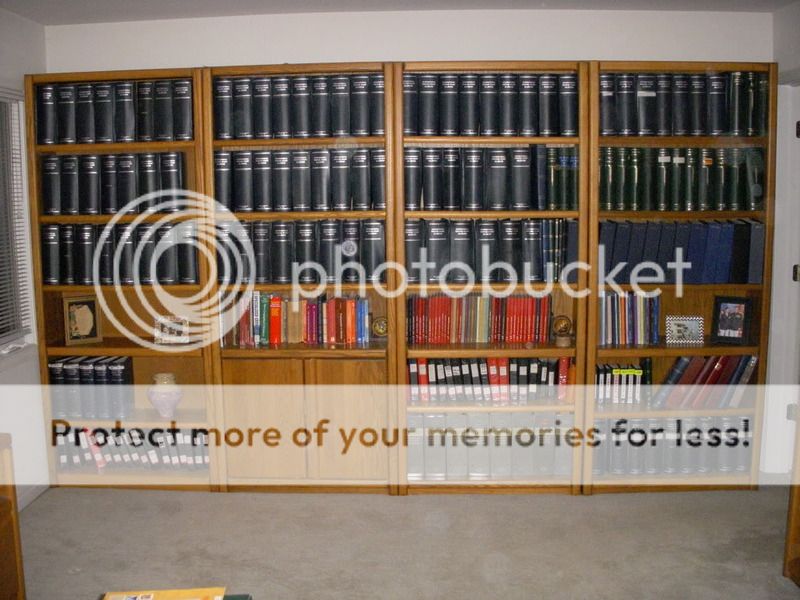
UPDATE 10/31/2011: Philatelic Pfool just finished his count using the 2006 Scott Catalog. The results: 1840-1940 total of 83,589 stamps and 1941-1952, 31,499 stamps. You can find a more detailed breakdown and interesting discussion here.
Thursday, October 20, 2011
The Evolution of the Scott Classic Catalogue Part 3
Continuing on from Part 2:
2004 (tenth edition). The color imaging was now within a few percentage points of completion, with dozens of firms and individuals contributing stamps for scanning (including upgrading the quality of some previous images). More than 1750 major and minor listings were added, including 95 forerunners for Aden, additions to Lombardy-Venetia and Austrian Offices in the Turkish Empire used in Albania, 330 Albanian forerunners, 40 Great Britain stamps used in Ecuador, Portugal stamps used in Funchal, and 288 major varieties of France used in Monaco. Listings for several countries were expanded to distinguish paper and perforation varieties as well as new shade varieties. One thinks that not that much needed to be done with major countries, but Great Britain, for example, had 93 new minor numbers. Cover listings were added for ten countries not previously included. Tannu Tuva collectors were particularly well served with not only 72 minor varieties but also 103 major number. most notably for the 1934-43 issues which have never appeared in a Scott catalog. And throughout the catalog were new explanatory footnotes.
2005 (eleventh edition). A new coated paper was used for this edition and unspecified "more perfected printing techniques." There were some 75,000 value changes and 1600 stamps were newly listed. More than 600 forerunner and special use stamps were added with the most in Great Britain stamps used abroad. The editor noted that the collectors of GB forerunners emphasize clear, readily identifiable cancels as many of the stamps themselves are "notoriously poorly centered…Because of this, it is not uncommon to find that values for British stamps used in the United Kingdom are substantially higher than for the same stamps used abroad, although the latter are much scarcer." Among non-UK forerunner, there were additional listings from Austria, Lombardy-Venetia, and Crete. The British Commonwealth, France and colonies, Portugal, Egypt and Mexico. Egyptian Suez Canal Company issues appear for the first time. One usually doesn't think there would be major numbered regular issues or commemoratives from the Classic period still to be added, but this edition included for the first time the 1938 Submarine issues from Spain (#605A-605G) which had been previously excluded because of their philatelic nature.
2006 (twelfth edition). More than 75,000 value changes were recorded, many of which were for listings (such as covers) that do not appear in the "regular" Scott catalogs. Several hundred new minor listings were added for a variety of countries plus a handful of major numbers for countries such as St. Christopher. The Western Ukraine was thoroughly reorganized and revalued. Eritrea now included cover listings. The image-scanning project neared 99% completion with this edition.
2007 (thirteenth edition). This was the first edition to include the 1920-1928 Colombia SCADTA Consular overprints (which did not appear in the Scott US Specialized Catalog until 2012). As usual there were hundreds of minor varieties as well as a few major numbers added for countries throughout the catalog. For example, Victoria had 50 new minor numbers and there were almost as many for Sudan.
2008 (fourteenth edition). In addition to the many valuation changes that first appeared in the standard Scott catalogs, there were 12,000 changes for issues that are found only in the Classics Catalog! In addition, there were more than a thousand new numbered items in the 2008 edition. Several French areas countries received significant attention, as did Hungary and British colonies. In a number of places, items that had been mentioned only in footnotes (such as some of the French Peace and Commerce keytype stames for its colonies) now have their own numbers. French Guiana, Fiume, Hong Kong, Hungary, Dungarpur, Morocco, and Czechoslovka's Legion Post in Siberia also received attention.
2009 (fifteenth edition). This edition won a gold medal in the APS's literature competition. There were over 26,000 value changes for stamps that are only listed in the Classics Catalogue--double the number from the previous year. The main reason for the number of increases was the weak US dollar. Austria boasted the largest number of increases in valuation. Editorial enhancements added 23 pages to this edition, including first time listings for the Canadian Semi-Official Air Post stamps and the forerunners for Puerto Rico. Eight new countries received cover listings. New major numbers were added for Afghanistan, Queensland, Rhodesia and Tasmania plus many new minor numbers including some for the US.
2010 (sixteenth edition). The scanning project has evolved from its goal of simply including an image of the stamp to concentrating on images of VF condition stamps and paying more attention to color accuracy. There were also new images for surcharged and overprinted stamps. Coverage for British stamps used abroad, including pre-stamp markings, was improved and two new Indian Feudatory States joined the catalog. Additional French Railway Parcel Post stamps were added as was some additional detail for French Colonies such as Memel. All in all, there were some 2,300 new numbered listings, far more than in any previous edition. Countries with new numbers included Cilicia, Belgian Congo, Ruandi-Urundi, Fiume, Hungary, Russia, Saudi Arabia, and Sweden.
2011 (seventeenth edition). The 17th edition sold out in the first 6 months. There were more than 10,000 Classics catalog-only valuation changes. Among the nearly 1,000 new numbered listings in 2011 was Greece 47g, the 20 lepta ultramarine Hermes head from 1875 with its control number both inverted and on the front, catalog value $210,000. While most of the other additions to this edition were minor Scott numbers, there were a handful of new major numbers for Albania, German stamps used in Austria after the Anschluss, and Cyprus. New minor numbers appear in Alaouites, Bosnia and Herzegovina (248! new varieties), French Congo, Haiti, Ivory Coast, Martinique, Mauritania, New Caledonia, Ile Rouad, Rhodesia, Russia, Senegal, Somali Coast, and Syria.
2012 (eighteenth edition). To be released in November 2011.
2004 (tenth edition). The color imaging was now within a few percentage points of completion, with dozens of firms and individuals contributing stamps for scanning (including upgrading the quality of some previous images). More than 1750 major and minor listings were added, including 95 forerunners for Aden, additions to Lombardy-Venetia and Austrian Offices in the Turkish Empire used in Albania, 330 Albanian forerunners, 40 Great Britain stamps used in Ecuador, Portugal stamps used in Funchal, and 288 major varieties of France used in Monaco. Listings for several countries were expanded to distinguish paper and perforation varieties as well as new shade varieties. One thinks that not that much needed to be done with major countries, but Great Britain, for example, had 93 new minor numbers. Cover listings were added for ten countries not previously included. Tannu Tuva collectors were particularly well served with not only 72 minor varieties but also 103 major number. most notably for the 1934-43 issues which have never appeared in a Scott catalog. And throughout the catalog were new explanatory footnotes.
2005 (eleventh edition). A new coated paper was used for this edition and unspecified "more perfected printing techniques." There were some 75,000 value changes and 1600 stamps were newly listed. More than 600 forerunner and special use stamps were added with the most in Great Britain stamps used abroad. The editor noted that the collectors of GB forerunners emphasize clear, readily identifiable cancels as many of the stamps themselves are "notoriously poorly centered…Because of this, it is not uncommon to find that values for British stamps used in the United Kingdom are substantially higher than for the same stamps used abroad, although the latter are much scarcer." Among non-UK forerunner, there were additional listings from Austria, Lombardy-Venetia, and Crete. The British Commonwealth, France and colonies, Portugal, Egypt and Mexico. Egyptian Suez Canal Company issues appear for the first time. One usually doesn't think there would be major numbered regular issues or commemoratives from the Classic period still to be added, but this edition included for the first time the 1938 Submarine issues from Spain (#605A-605G) which had been previously excluded because of their philatelic nature.
2006 (twelfth edition). More than 75,000 value changes were recorded, many of which were for listings (such as covers) that do not appear in the "regular" Scott catalogs. Several hundred new minor listings were added for a variety of countries plus a handful of major numbers for countries such as St. Christopher. The Western Ukraine was thoroughly reorganized and revalued. Eritrea now included cover listings. The image-scanning project neared 99% completion with this edition.
2007 (thirteenth edition). This was the first edition to include the 1920-1928 Colombia SCADTA Consular overprints (which did not appear in the Scott US Specialized Catalog until 2012). As usual there were hundreds of minor varieties as well as a few major numbers added for countries throughout the catalog. For example, Victoria had 50 new minor numbers and there were almost as many for Sudan.
2008 (fourteenth edition). In addition to the many valuation changes that first appeared in the standard Scott catalogs, there were 12,000 changes for issues that are found only in the Classics Catalog! In addition, there were more than a thousand new numbered items in the 2008 edition. Several French areas countries received significant attention, as did Hungary and British colonies. In a number of places, items that had been mentioned only in footnotes (such as some of the French Peace and Commerce keytype stames for its colonies) now have their own numbers. French Guiana, Fiume, Hong Kong, Hungary, Dungarpur, Morocco, and Czechoslovka's Legion Post in Siberia also received attention.
2009 (fifteenth edition). This edition won a gold medal in the APS's literature competition. There were over 26,000 value changes for stamps that are only listed in the Classics Catalogue--double the number from the previous year. The main reason for the number of increases was the weak US dollar. Austria boasted the largest number of increases in valuation. Editorial enhancements added 23 pages to this edition, including first time listings for the Canadian Semi-Official Air Post stamps and the forerunners for Puerto Rico. Eight new countries received cover listings. New major numbers were added for Afghanistan, Queensland, Rhodesia and Tasmania plus many new minor numbers including some for the US.
2010 (sixteenth edition). The scanning project has evolved from its goal of simply including an image of the stamp to concentrating on images of VF condition stamps and paying more attention to color accuracy. There were also new images for surcharged and overprinted stamps. Coverage for British stamps used abroad, including pre-stamp markings, was improved and two new Indian Feudatory States joined the catalog. Additional French Railway Parcel Post stamps were added as was some additional detail for French Colonies such as Memel. All in all, there were some 2,300 new numbered listings, far more than in any previous edition. Countries with new numbers included Cilicia, Belgian Congo, Ruandi-Urundi, Fiume, Hungary, Russia, Saudi Arabia, and Sweden.
2011 (seventeenth edition). The 17th edition sold out in the first 6 months. There were more than 10,000 Classics catalog-only valuation changes. Among the nearly 1,000 new numbered listings in 2011 was Greece 47g, the 20 lepta ultramarine Hermes head from 1875 with its control number both inverted and on the front, catalog value $210,000. While most of the other additions to this edition were minor Scott numbers, there were a handful of new major numbers for Albania, German stamps used in Austria after the Anschluss, and Cyprus. New minor numbers appear in Alaouites, Bosnia and Herzegovina (248! new varieties), French Congo, Haiti, Ivory Coast, Martinique, Mauritania, New Caledonia, Ile Rouad, Rhodesia, Russia, Senegal, Somali Coast, and Syria.
2012 (eighteenth edition). To be released in November 2011.
Wednesday, September 28, 2011
APS Circuits
 I started receiving APS Circuit books in May 2010. While I always knew I would eventually want to do this, the immediate motivation was the scarcity of large worldwide albums on eBay, a situation that has gotten even worse this year. (The albums housing even ten thousand stamps are few, and the only larger albums I've seen lately have borne ridiculously high price tags--there is one now on eBay with an ask price of $29,999 which might have 15,000 stamps, probably fewer.)
Now after examining some 300 sales books, I thought it was appropriate to report whether these are a useful way for the Volume One collector to build his or her collection. (I originally posted some of this on stampcommunity.org.)
In case you aren't familiar with the circuits, the American Philatelic Society operates a Sales Division for its members which, according to the APS website, circulates some 42,000 sales books with close to $2 million in sales each year. A typical sales book contains 16 pages with 12 spaces per page. Members of the APS purchase blank sales books in which to mount the stamps they wish to sell. Cost of each stamp is set by the individual seller and can range from a few pennies to a $1,000. The APS encourages sellers to price their stamps reasonably for quick sale (but see below!).
The stamps mounted in each book are supposed to correspond to one of 165 or so categories, categories being countries, areas, or topicals. The greatest specialization is, of course, within U.S. stamps: for example, there are separate circuits for U.S. General, U.S. Fancy Cancels, U.S. Revenues, etc. Because of the popularity of the British Empire, there are also a fair amount of categories here, such as British Atlantic Islands and Australia States. In addition to individual countries, there are also more generic categories, such as Southeast Asia and Southern Europe.
APS members who wish to buy inform the Society which categories they wish to receive. The APS keeps track of who wants what and assembles circuits of ten or so books from different sellers which are sent round robin to up to 10 members who live in roughly the same geographical region. Each member has one week to decide what they want before forwarding the circuit to the next member on the list. Once the last person on the circuit returns the books to the APS mothership, another circuit is sent out and the process starts all over again.
So, to begin with, are there any categories specifically tailored to 1840-1940 collectors? Yes, a few: US 19th Century, British Empire-Victorian Era, British Pre-Elizabethan, Great Britain 19th Century, Europe (1840-1940), France 19th-Century, Germany Pre-1945, and Global (1840-1940). But, of course, there are many other single country and area choices that will contain stamps from the first 100 years of philately.
Because I collect the world 1840-1940, there are far more circuits of potential interest than I can cope with. So I tend to subscribe to some circuits for a year or two and then switch to something else for awhile. So far, at least, the APS staff have been very accommodating.
I have received 31 circuits in the past 15 months or 300+ individual books. From these I've purchased a total of 857 stamps at a cost of $692.88 which works out to about 81 cents a stamp. What is missing, of course, is how that compares to the catalog value. The majority of what I am currently buying are inexpensive stamps, i.e., under $5, and these probably average out to 40% of Scott catalog. (It usually works out a little better than this as the seller may be using a Scott catalog that is a couple of years old.)
But I have bought some more expensive stamps--perhaps a hundred--and these have typically been at a fraction of catalog value because of defects invisible from the front, usually small thins or, my favorite, "no gum, priced as used." I only kept a record of the catalog value of the first four circuits I received, but these worked out to almost $600 catalog value for a little over $100 or 17%.
Here are some advantages and disadvantages of the circuits (the fact that there are more disadvantages doesn't mean I think the disadvantages outweigh the advantages--the opposite is the case):
Advantages:
--Prices are generally pretty good, certainly better than most dealer's prices for individual stamps. Fine to Very Fine appearing expensive stamps with defects invisible from the front can be real bargains.
--You can verify the condition of stamps on the spot.
--Most stamps are priced individually allowing one to fill in short sets (although, of course, you will find complete sets offered which are either bargains or frustrations depending upon whether you already own some of the stamps).
--You can drool at your leisure over rare or expensive stamps that you might not otherwise see in person, even if you can't afford to buy them.
Disadvantages:
--If you subscribe to many circuits, especially those that have only a few other members on the circuit, you will simultaneously receive multiple mailings on occasion. My record is 5 within 3 weeks. Contrarily, the more popular the circuit, the longer it takes to make the rounds. I tend to receive circuits more often as there are only 4 or 5 of us on several of my circuits. By the way, if you know you are going on vacation, the APS can arrange for you to be skipped.
--Because I receive a lot of "general" circuits with multiple countries, I too often encounter sellers who make little effort to mount countries in alphabetical order or stamps within a country in order by catalog number. For a worldwide collector, this can be really irritating and I've cancelled two circuits that just were more trouble than they were worth. I don't mean this to be a tirade against a few mistakes but I saw one book where literally every page was random.
--It typically costs $5-$7 to mail circuits to the next recipient plus a 5% buyer fee. I still think I come out ahead as I would in any case be paying postage and perhaps tax when purchasing a similar quantity of stamps by other means.
--While most sellers price their stamps at no more than 50% or so of catalog, you will find a few books priced at less and sometimes rather more. You have to wonder why the latter bothered to take the time.
The APS has started sending a single mailing of selected circuits to members. I have requested these on a couple of occasions for countries that I don't normally see in my other circuits. So if you are "on the fence," watch the APS Journal for what is available. The APS has also started offering the possibility of purchasing complete "clearance" books, but I haven't tried this yet.
For more expensive stamps that look to be a bargain, I suggest checking out the same stamps in the APS store. For example, I was considering buying one of the Cape of Good Hope triangles recently from a sales book only to find a slightly better copy of the same stamp for $10 less on the APS store site.
The bottom line is I really think this is one of the best services offered by the APS.
Sunday, August 21, 2011
A Cheatsheet for Problematic Classic Era Stamps
The American Philatelic Society has a handy-dandy overview of countries whose stamps are frequently misidentified, forged, reprinted, etc., as part of its advice to sellers using their circuit books. I've known about the document for a while, and have been meaning to post a link to this three page pdf.
A few examples:
Australia, 1-76, 113-129, Misidentifications, because watermarks are not noted.
Bolivia, 1–59, Forgeries and fake overprints (40–46 oval cancels with heavy bars are suspect).
United States, Washington/Franklins, Misidentifications, perf. alterations, and regumming.
While a lot of the document is too general to be of much use by itself (for example, watch out for forgeries on the early issues of Trinidad), I still think the list is worth checking out by other general collectors.
A few examples:
Australia, 1-76, 113-129, Misidentifications, because watermarks are not noted.
Bolivia, 1–59, Forgeries and fake overprints (40–46 oval cancels with heavy bars are suspect).
United States, Washington/Franklins, Misidentifications, perf. alterations, and regumming.
While a lot of the document is too general to be of much use by itself (for example, watch out for forgeries on the early issues of Trinidad), I still think the list is worth checking out by other general collectors.
Tuesday, August 16, 2011
The Evolution of the Scott Classic Catalogue Part 2
Continuing on from Part 1:
2000 (sixth edition). Another 45 countries received cover listings for the first time bringing the total to 131 countries. Some other countries with cover listings in earlier editions were expanded, such as Austria, Belgium, Canada, France, Great Britain, Luxembourg, Monaco, Philippines and Spain. Eleven countries received listings for bisects. Canada gained 14 additional pages, largely because of the O.H.M.S. Officials, but also plate blocks, coil pairs, line pairs, and paste-up pairs, not to mention die types, etc. First or early issues of many countries received extra attention in this edition. Many of these are what could be termed Forerunners, such as those of Angra, Ascension, Cayman Islands, Cyprus and Egypt, Horta, Kiauchau, Madeira and Porta Delgada, New Zealand, Seychelles, and Strait Settlements. Fifty-five countries were given new minor listings for shades which, Scott notes, "usually reflect[s] new printings of definitive stamps."
2001 (seventh edition). The seventh edition boasted 46 more pages than the sixth. Australia and its North West Pacific Islands were one of the principal beneficiaries, both with expanded coverage of the Roos and the Perf OS Officials of Australia. In Europe, the France Occupation Stamps were beefed up and a page was added for the Balloon Montes covers. Danzig, Denmark, Germany, Italy and Netherlands also received attention. (I like the phrase that Mr. Morrissey used to describe the nearly doubling of coverage for Danzig, terming it "one of the liveliest 'dead' countries.") Germany, very much alive and issuing, received 1/3 more coverage. Fourteen countries had cover listings for the first time. Postage dues on covers were added for seven countries, and eight countries received more listings. Continuing with the addition of forerunner issues that began in 2000 were listings for "the stamps of a parent, or other country, used in a colony or other country," e.g., the stamps of Great Britain used in Argentina, Bolivia and Brazil.
2002 (eighth edition). This edition was the first with James E Koetzel writing the "Letter from the Editor." There were new or reinstated major numbers for Barbados, Bermuda, Egypt, and Somaliland Protectorate. There were additional Forerunner listings for Bangkok, British East Africa, Brunei, Cape Verdi, and South Africa. Twenty-two countries had either expanded listings or joined the Catalogue for the first time. This brought the total of countries with cover listings to more than 150. There were new valuations for never hinged stamps for 16 countries plus listings for multiples for 18 countries. Specimen stamps are included for 13 countries. There were more listings for plate and printing varieties plus many minor listings for color shades, overprint/surcharge varieties, etc. Perhaps most noticeable was the additional of high quality digitally scanned images replacing the velox prints used in earlier catalogs. These scans were from the stamps kindly loaned to Scott by an unnamed Ohio collector who we now know was Dr. Hsien-ming Meng.
2003 (ninth edition). With this edition, the percentage of color stamp images hits the ninety percent mark. More than 2300 new basic listings were added to the Catalogue, including massive new coverage of the China Treaty Ports. Coverage for the Ukraine was "revamped and expanded," including all of the early issues. World War I Occupation issues for the British Operations in German East Africa were added. Coverage for Saar was, in Kloetzel's words, "dramatically expanded," to the tune of 201 varieties. This was the first year in a multi-year project to expand Portuguese Colonies including more than a 100 new varieties. More forerunner stamps, 246 in all, were added. I should note that some (all?) of the Classic Catalogues have an Additions, Deltions and Changes page which drills down to specifics even more than the editor's letters.
To be continued....
2000 (sixth edition). Another 45 countries received cover listings for the first time bringing the total to 131 countries. Some other countries with cover listings in earlier editions were expanded, such as Austria, Belgium, Canada, France, Great Britain, Luxembourg, Monaco, Philippines and Spain. Eleven countries received listings for bisects. Canada gained 14 additional pages, largely because of the O.H.M.S. Officials, but also plate blocks, coil pairs, line pairs, and paste-up pairs, not to mention die types, etc. First or early issues of many countries received extra attention in this edition. Many of these are what could be termed Forerunners, such as those of Angra, Ascension, Cayman Islands, Cyprus and Egypt, Horta, Kiauchau, Madeira and Porta Delgada, New Zealand, Seychelles, and Strait Settlements. Fifty-five countries were given new minor listings for shades which, Scott notes, "usually reflect[s] new printings of definitive stamps."
2001 (seventh edition). The seventh edition boasted 46 more pages than the sixth. Australia and its North West Pacific Islands were one of the principal beneficiaries, both with expanded coverage of the Roos and the Perf OS Officials of Australia. In Europe, the France Occupation Stamps were beefed up and a page was added for the Balloon Montes covers. Danzig, Denmark, Germany, Italy and Netherlands also received attention. (I like the phrase that Mr. Morrissey used to describe the nearly doubling of coverage for Danzig, terming it "one of the liveliest 'dead' countries.") Germany, very much alive and issuing, received 1/3 more coverage. Fourteen countries had cover listings for the first time. Postage dues on covers were added for seven countries, and eight countries received more listings. Continuing with the addition of forerunner issues that began in 2000 were listings for "the stamps of a parent, or other country, used in a colony or other country," e.g., the stamps of Great Britain used in Argentina, Bolivia and Brazil.
2002 (eighth edition). This edition was the first with James E Koetzel writing the "Letter from the Editor." There were new or reinstated major numbers for Barbados, Bermuda, Egypt, and Somaliland Protectorate. There were additional Forerunner listings for Bangkok, British East Africa, Brunei, Cape Verdi, and South Africa. Twenty-two countries had either expanded listings or joined the Catalogue for the first time. This brought the total of countries with cover listings to more than 150. There were new valuations for never hinged stamps for 16 countries plus listings for multiples for 18 countries. Specimen stamps are included for 13 countries. There were more listings for plate and printing varieties plus many minor listings for color shades, overprint/surcharge varieties, etc. Perhaps most noticeable was the additional of high quality digitally scanned images replacing the velox prints used in earlier catalogs. These scans were from the stamps kindly loaned to Scott by an unnamed Ohio collector who we now know was Dr. Hsien-ming Meng.
2003 (ninth edition). With this edition, the percentage of color stamp images hits the ninety percent mark. More than 2300 new basic listings were added to the Catalogue, including massive new coverage of the China Treaty Ports. Coverage for the Ukraine was "revamped and expanded," including all of the early issues. World War I Occupation issues for the British Operations in German East Africa were added. Coverage for Saar was, in Kloetzel's words, "dramatically expanded," to the tune of 201 varieties. This was the first year in a multi-year project to expand Portuguese Colonies including more than a 100 new varieties. More forerunner stamps, 246 in all, were added. I should note that some (all?) of the Classic Catalogues have an Additions, Deltions and Changes page which drills down to specifics even more than the editor's letters.
To be continued....
Subscribe to:
Posts (Atom)